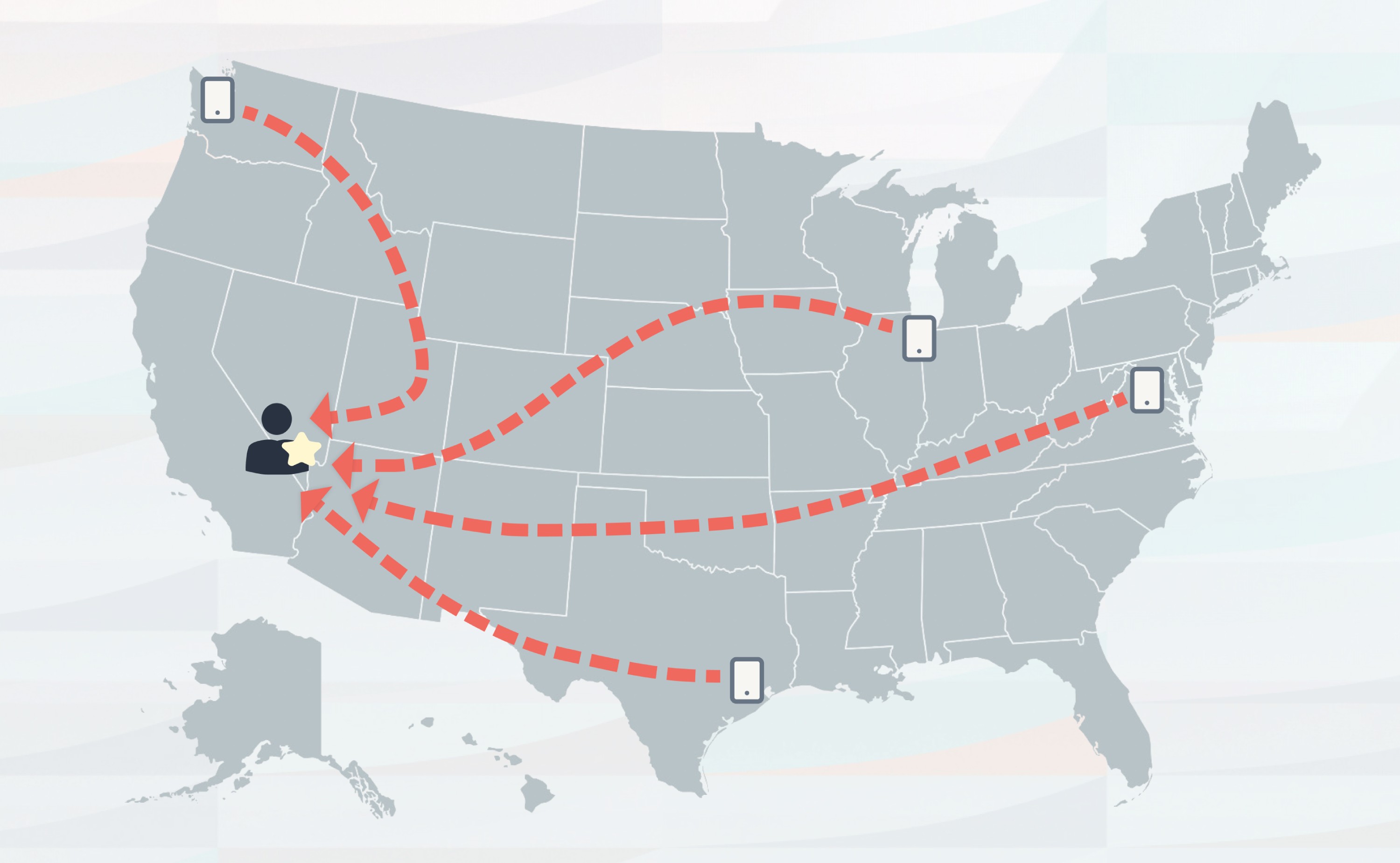
You do not have to live in Las Vegas to play the major football contests held there.
You do need to travel to Nevada to register. After that, a local proxy — a friend, family member, or paid proxy service — can submit your picks from Nevada while you go home, travel, or live anywhere else. You do not need to return every week.
That basic setup applies to contests such as Circa Survivor, Circa Million, Circa Grandissimo, Westgate SuperContest, and Westgate SuperContest Survivor. Each operator has its own registration process, deadlines, submission methods, and rules.
This guide explains the ins and outs of how the process works, where proxy services differ, and what to think about before trusting someone with an entry that could eventually be worth a lot of money.
Informal proxying
What is a Las Vegas contest proxy?
A proxy is a person in Nevada who is authorized to submit contest picks for someone else.
You still own the entry and decide what to pick. The proxy handles the local submission. Each week: lines drop, you decide, you send the pick, the proxy submits in Nevada, and you get confirmation.
The casino runs the contest. Your arrangement with the proxy is separate. The operators generally put the responsibility for getting picks in on the entrant, even when an authorized proxy is involved. That is why the service's deadlines, communication, backup plans, and confirmation process matter.
Which Las Vegas contests use proxies?
Circa
Circa runs Survivor, Million, and Grandissimo. Survivor and Grandissimo are survivor contests where each entry picks one team to win per leg without reusing teams, with extra Thanksgiving and Christmas legs. Million is a season-long side-picking contest with five NFL picks each week against Circa's lines.
Westgate
Westgate runs SuperContest and SuperContest Survivor. SuperContest is a weekly five-pick side contest against the SuperContest line. SuperContest Survivor follows the same one-team-per-week survivor format without team reuse.
All of these contests require weekly picks through the operator's approved Nevada process. A proxy gives an out-of-state player a local person who can handle that process.
Do you have to go to Las Vegas to register?
You have to register in person in Nevada.
For Circa contests, a proxy must be present when the proxy is registered. Circa's current rules allow an entrant to authorize up to three proxies.
For Westgate's SuperContest and SuperContest Survivor, the contestant and proxy sign up in person together.
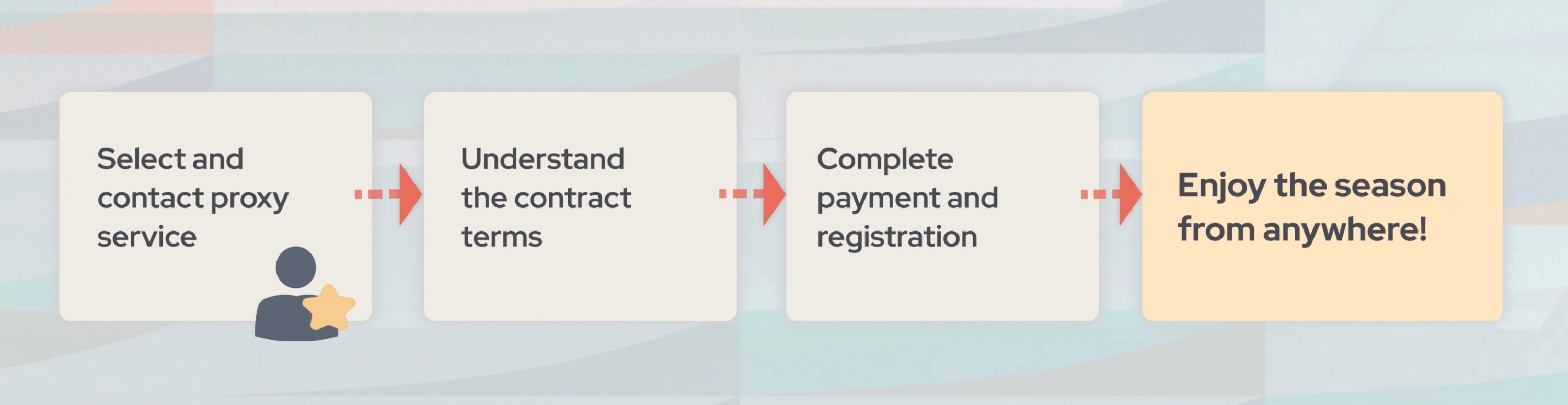
Before you travel, confirm where to meet, what ID to bring, timing, and how cards and credentials are handled. Do not wait until you are standing in the sportsbook to begin looking for a proxy.
What happens after registration?
Once registration is finished, you can leave Nevada. During the season, you make your decisions from wherever you are and send picks by text, email, phone, form, or a proxy web portal. Your proxy submits them through the sportsbook's approved method.
When the season ends, the official entrant remains the person entitled to collect the prize. The proxy does not become the owner of the entry or the prize simply because the proxy submitted picks. Prize procedures vary by operator and season — read the official rules before assuming a prize can be mailed, transferred, or collected by somebody else.
The casino deadline and the proxy deadline are different
This is one of the first details new customers miss.
The casino has an official deadline. The proxy service usually has its own earlier deadline.
For the 2026 season, Circa's standard weekly deadline is 4 p.m. Pacific on Saturday, with earlier deadlines for games that start sooner and special rules for Thanksgiving and Christmas. Westgate's standard deadline is 5 p.m. Pacific on Saturday, with picks due before any earlier game a player wants to use.
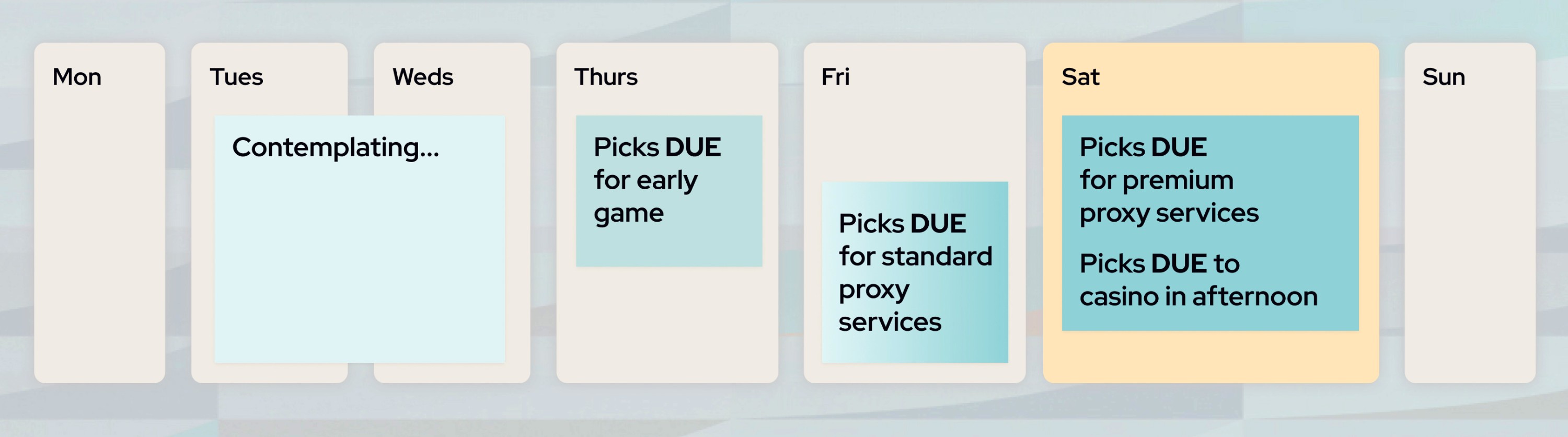
A proxy service cannot have every customer send picks one minute before the casino closes. The service needs lead time to collect picks, resolve unclear messages, submit every entry, save confirmation, and handle app or casino issues — which is why your proxy deadline is often Friday night or Saturday morning.
An earlier customer deadline gives the proxy more time and usually costs less. A later deadline gives the player more information and requires more staffing and tighter operations.
Why would someone pay for a later deadline?
Football information keeps changing. Waiting longer lets you react to injury news, weather, line movement, and other late information that can change the best pick.
Some players want the latest possible deadline every week. Others are happy to submit early most weeks and only want extra time when a decision is difficult.
Compare proxy plans based on the actual deadline you receive. Two services with different deadlines are offering different products even when both ultimately submit the same kind of pick.
Can you buy extra time only when you need it?
Some services require a customer to choose one deadline package for the whole season.
PBJ also lets customers buy a time extension during a week when they need more time. That can make sense for a player who usually decides early but wants to wait on a particular injury, line move, or late-season situation. View current PBJ deadlines and service options.
How do proxy services collect your picks?
Common methods include text, email, phone, forms, spreadsheets, or a customer portal. The method matters because a good system should match each pick to the right entry, track changes, identify the final instruction, and leave proof of sportsbook submission — with a backup when the normal method fails.
A text thread can work for one entry. It gets harder when a customer has several entries, changes picks, plans future weeks, or uses different service deadlines.
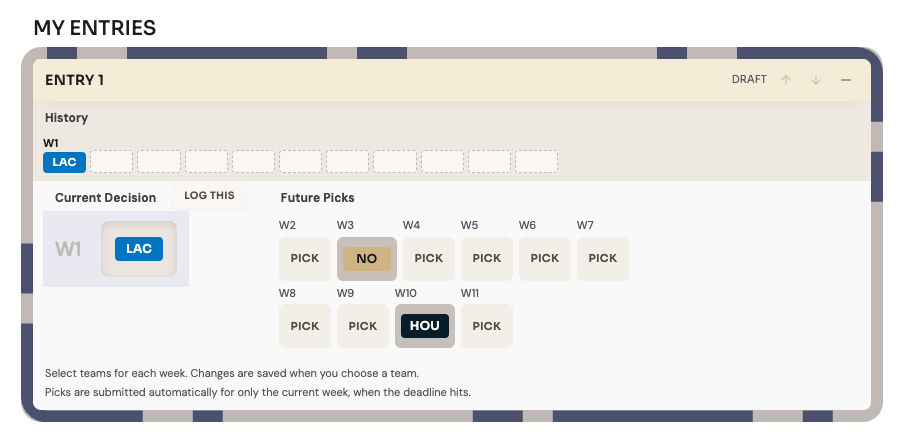
Survivor players often think several weeks ahead. PBJ's contest board lets customers draft future picks and change them as often as needed across multiple entries. Only the current week's final instruction gets submitted to the sportsbook; future plans stay as planning information.
Need a proxy for a Las Vegas contest?
PBJ handles registration coordination, weekly pick submission, future planning, multiple entries, confirmation, and optional deadline extensions.
How do you know the proxy submitted the right pick?
Proxy services handle confirmation in different ways — a message, app screenshot, photo of a receipt, or portal status. There are two separate things to confirm: the proxy received your instruction, and the sportsbook received the correct pick for the correct entry. Those are not the same event.
A strong process tracks your original instruction, any changes, the final pick, the entry ID, submission time, and sportsbook confirmation with a screenshot, receipt, or confirmation number when available.
Circa and Westgate both use official confirmation records in their current systems. Their app confirmation screens include a unique 12-digit electronic ticket serial number. Their rules encourage entrants to screenshot the confirmation after submission. Physical kiosk or self-service submissions can produce a printed ticket or receipt.
A dependable weekly flow is straightforward: enter a pick for a specific entry, change it before the service deadline if needed, the proxy submits in Nevada, you see sportsbook confirmation, and the record stays available if a question comes up later.
App submission versus counter submission
A proxy can usually submit through the operator's Nevada app or through an approved sportsbook location.
App submission
App submission is fast and works well at scale, but it leaves room for app issues, geolocation problems, account lockouts, or tapping the wrong team. A careful service should review the confirmation screen after every submission.
Kiosk or counter submission
A physical submission produces a ticket or receipt through the sportsbook's on-site system. Some players prefer the extra verification step; it costs more labor because the proxy has to travel, wait, enter picks, and organize proof for each customer.
Can a friend be your proxy?
If you trust someone to log into your app and enter picks, you do not necessarily need them authorized by Circa as your official proxy. Many players use a trusted friend or family member this way — someone available every week who is willing to help for free.
There is also a formal route: a friend in Nevada can register as your authorized proxy if they meet the contest's requirements and complete the operator's registration process with you. That gives them the ability to submit at the counter if the app fails — something an informal helper cannot do.
App geolocation and account security still apply either way. Circa and Westgate currently describe a 30-minute restriction after an out-of-state login before the account can be used again in Nevada. Check the current official rules and use the operator's approved process.
Are you locked into the same proxy all season?
No. You can always stop using a proxy if you are worried about integrity. Paying a proxy at the beginning of the season does not mean you must keep sending that service your picks forever.
The exact steps depend on the operator, the proxies already authorized, your account access, and the agreement you made with the service. At Circa, an entrant may currently authorize up to three proxies. Changing an account password can stop someone from using the login, but it may not remove that person as an officially registered proxy — those are separate issues. Before hiring a service, ask about mid-season exit, refundable fees, who controls the contest card and credentials, and how to switch if needed. Understand how control works before the entry becomes valuable.
Why privacy matters
A proxy sees information that can become sensitive. Early in the season, one customer's pick may not feel especially important. Late in the season, a live entry can be worth a large amount of money, and knowing what that entry plans to pick may have strategic value to other players.
Ask who can see customer picks and future plans, whether the owner or staff play the contest, whether customer picks feed projections or popularity numbers, and how access is limited inside the company. Some proxy operators play the contests themselves — that can mean they understand the weekly pressure, but it can also create a trust concern because they may have their own live entries.
A proxy relationship may feel routine in September and very different when an entry survives into December with a chance to win millions. Trust comes from clear deadlines, written procedures, reliable communication, submission records, a backup plan, limited access to customer information, and transparent conflicts. Size alone does not answer the trust question — a large company may have more redundancy; a smaller service may have fewer people with access.
PBJ and Survivor Atlas treat customer picks and planning data as private. Customer activity is not used to inform Survivor Atlas projections or play.
How proxy pricing works
Proxy services charge in several ways: a flat seasonal fee, a per-entry fee, earlier and later deadline packages, premium counter service, weekly deadline extensions, high-touch service, or a reduced upfront fee plus a percentage of winnings. A flat fee gives a known cost; a later deadline plan charges for more information and tighter weekly operations; counter service charges for physical submission labor; a percentage arrangement lowers upfront cost but gives the proxy a direct financial interest in your result.
PBJ offers multiple service levels so customers can choose based on deadline, confirmation, handling, and the amount of help they want. View current PBJ pricing and service options.
What can go wrong?
Most proxy weeks are simple. The risk comes from the few weeks when something unusual happens — missed deadlines, conflicting instructions sent in two places, picks assigned to the wrong entry or team, app or geolocation failures, account lockouts after out-of-state logins, missed holiday deadlines, future plans mistaken for the current pick, submissions that go through without saved confirmation, or a proxy becoming unavailable close to the deadline.
The best process makes the final instruction easy to identify and leaves enough time to solve a problem.
Questions to ask before choosing a proxy
Ask these before paying:
- Registration logistics: where and when will we meet, and does the proxy need to attend?
- Normal customer deadline, timezone, and whether you can buy extra time in an individual week
- How picks are entered, changed, and labeled across multiple entries
- Submission method, confirmation proof, and backup if the app fails
- Privacy: who sees picks, whether staff play, and how customer data is used
- Mid-season exit and who controls the contest card and credentials
- Special legs (Thanksgiving, Christmas) and prize collection help if you win
Clear answers matter more than a fancy sales page.
Why Survivor Atlas built PBJ
Survivor Atlas built PBJ because the proxy process touches the same decisions serious players already manage throughout the season — multiple entries, future pick plans, used teams, different deadlines, late injury news, and high-value late-season decisions. PBJ gives customers a place to manage that workflow instead of relying on a loose collection of text messages.
PBJ covers registration coordination, a contest board for advance planning, multiple-entry management, clear weekly deadlines, optional extensions, submission status, confirmation records, and counter submission options. We built the kind of proxy system we wanted to use ourselves.
See PBJ Proxy OptionsFinal takeaway
You need to make one registration trip to Nevada. You do not need to stay there for the season.
A proxy can handle weekly submission from Nevada while you make your decisions from anywhere else.
The main differences between proxy services are the deadline, submission method, confirmation, planning tools, privacy, backup process, and the people you are trusting.
Take those differences seriously. A weekly pick can eventually become a seven-figure instruction.